

ISSN 0439-755X
CN 11-1911/B
CN 11-1911/B
Acta Psychologica Sinica ›› 2026, Vol. 58 ›› Issue (10): 2022-2034.doi: 10.3724/SP.J.1041.2026.2022
• Reports of Empirical Studies • Previous Articles Next Articles
LIU Rong, ZHANG Shuangxi, SUN Xiao, ZHANG Guimin, SONG Yaowu( )
)
Published:2026-10-25
Online:2026-08-04
Contact:
SONG Yaowu
E-mail:syw@hbu.edu.cn.
Supported by:LIU Rong, ZHANG Shuangxi, SUN Xiao, ZHANG Guimin, SONG Yaowu. (2026). Emotion-Specific or General? An ALE Meta-Analysis of Inhibitory Control Impairments in Patients with Depression. Acta Psychologica Sinica, 58(10), 2022-2034.
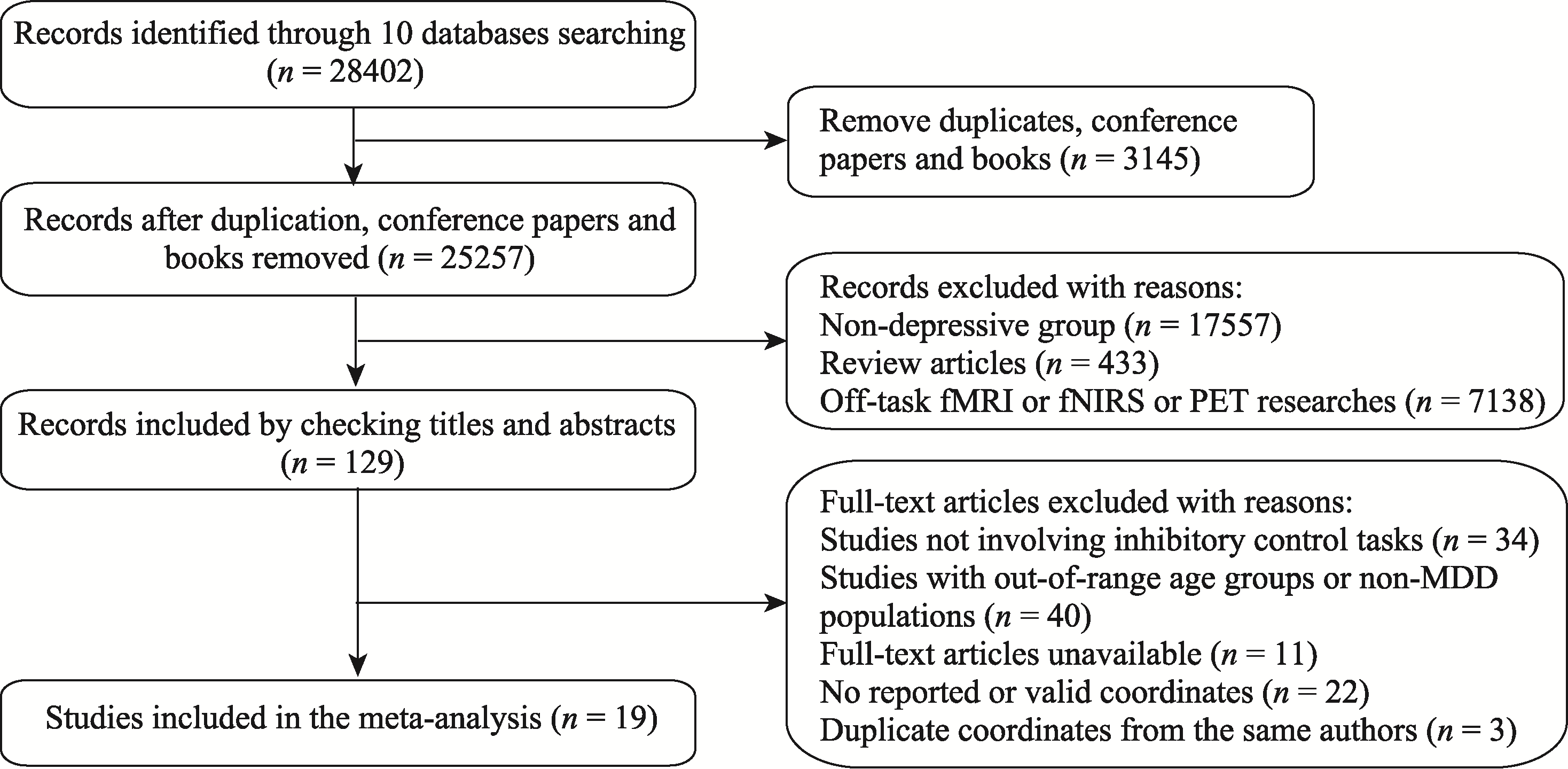
Figure 1. Flowchart of literature searching and selection process.
| Study | Task | Difference | Method | Foci type | Behavioral results |
|---|---|---|---|---|---|
| Liu et al. ( | E-GNG | MDD < HC | WB | E | ACC: MDD < HC |
| Wang et al. ( | E-OB | MDD < HC | Both | E | RT: MDD < HC |
| Chechko et al. ( | E-stroop | Both | WB | E | ACC (Neg): MDD < HC |
| Eugène et al. ( | NAP | MDD > HC | Both | E | No |
| Yang et al. ( | DF | MDD > HC | WB | E | DFE (Neg): MD < HC |
| Elliott et al. ( | E-GNG | MDD > HC | ROI | E | No |
| Carew et al. ( | TS | Both | WB | E | — |
| Dai et al. ( | IOR | MDD > HC | ROI | Both | IOR (Neu): MDD > HC |
| Sacchet et al. ( | TNT | MDD > HC | WB | Both | No |
| Dichter et al. ( | OB | Both | WB | Both | No |
| Fales et al. ( | Stroop | Both | WB | Both | No |
| Alders et al. ( | Stroop | MD < HC | WB | N | No |
| Simeonova et al. ( | Stroop n-back | MDD > HC | WB | N | ACC: MD < HC |
| Langenecker et al. ( | GNG | MDD > HC | WB | N | Rejections: MDD > HC |
| Richard-Devantoy et al. ( | GNG | MDD > HC | WB | N | No |
| Korgaonkar et al. ( | GNG | MDD > HC | Both | N | No |
| Wagner et al. ( | Stroop | MDD > HC | ROI | N | No |
| Crane et al. ( | GNG | MDD < HC | WB | N | No |
| Matthews et al. ( | SST | MDD > HC | WB | N | No |
Table 1 Research information of the included studies
| Study | Task | Difference | Method | Foci type | Behavioral results |
|---|---|---|---|---|---|
| Liu et al. ( | E-GNG | MDD < HC | WB | E | ACC: MDD < HC |
| Wang et al. ( | E-OB | MDD < HC | Both | E | RT: MDD < HC |
| Chechko et al. ( | E-stroop | Both | WB | E | ACC (Neg): MDD < HC |
| Eugène et al. ( | NAP | MDD > HC | Both | E | No |
| Yang et al. ( | DF | MDD > HC | WB | E | DFE (Neg): MD < HC |
| Elliott et al. ( | E-GNG | MDD > HC | ROI | E | No |
| Carew et al. ( | TS | Both | WB | E | — |
| Dai et al. ( | IOR | MDD > HC | ROI | Both | IOR (Neu): MDD > HC |
| Sacchet et al. ( | TNT | MDD > HC | WB | Both | No |
| Dichter et al. ( | OB | Both | WB | Both | No |
| Fales et al. ( | Stroop | Both | WB | Both | No |
| Alders et al. ( | Stroop | MD < HC | WB | N | No |
| Simeonova et al. ( | Stroop n-back | MDD > HC | WB | N | ACC: MD < HC |
| Langenecker et al. ( | GNG | MDD > HC | WB | N | Rejections: MDD > HC |
| Richard-Devantoy et al. ( | GNG | MDD > HC | WB | N | No |
| Korgaonkar et al. ( | GNG | MDD > HC | Both | N | No |
| Wagner et al. ( | Stroop | MDD > HC | ROI | N | No |
| Crane et al. ( | GNG | MDD < HC | WB | N | No |
| Matthews et al. ( | SST | MDD > HC | WB | N | No |
| Study | Depression Diagnosis and Severity Assessment | Numbers of partipants | Gender ratio (female/male) | Age (Mean ± SD/Range) | ||||||
|---|---|---|---|---|---|---|---|---|---|---|
| Diagnostic Criteria | Measurement scales | MDD scores Mean (SD)/Median (Range) | HC scores Mean (SD)/Median (Range) | MDD | HC | MDD | HC | MDD | HC | |
| Liu et al. ( | DSM-IV | BDI-II | 33.00 (12.00~49.00) | 3.50(0~21.00) | 30 | 34 | 23/7 | 22/12 | 27.97 ± 8.16 | 26.53 ± 9.29 |
| Wang et al. ( | DSM-IV | HAM-D | 19.90(5.30) | 0.55(0.80) | 19 | 20 | 12/7 | 13/7 | 39.30 ± 9.00 | 36.50 ± 10.50 |
| Chechko et al. ( | DSM-IV | BDI HAM-D | 31.70(8.20) 22.70(5.00) | 1.40(2.60) | 18 | 18 | 13/5 | 13/5 | 36.50 ± 10.80 | 36.00 ± 10.30 |
| Eugène et al. ( | DSM-IV | BDI-II | 29.00(10.4) | 1.00(1.60) | 12 | 12 | 6/6 | 8/4 | 34.40 ± 11.70 | 33.80 ± 9.90 |
| Yang et al. ( | DSM-IV | BDI HAM-D | 16.80(8.70) 21.30(5.40) | 5.50(4.10) 2.60(1.40) | 16 | 16 | 9/7 | 10/6 | 32.00 ± 8.24 | 30.00 ± 8.98 |
| Elliott et al. ( | DSM-IV | HAM-D MADR | 23.10(3.90) 31.30(5.20) | — | 10 | 11 | — | — | 42.20 ± 8.30 | 37.60 ± 9.70 |
| Carew et al. ( | DSM-IV | BDI-II HAM-D | 30.30(9.40) 15.40(3.90) | 8.80(6.50) | 15 | 16 | 15/0 | 16/0 | 16.00~24.00 | 16.00~24.00 |
| Dai et al. ( | DSM-IV | BDI-II HAM-D PHQ-9 | 35.86(10.12) 23.43(2.94) 21.00(5.80) | 2.12(1.62) 1.76(1.12) 1.09(1.26) | 30 | 33 | 23/7 | 21/12 | 48.77 ± 11.88 | 48.85 ± 12.86 |
| Sacchet et al. ( | DSM-IV | BDI | 31.10(9.50) | 1.80(2.20) | 16 | 16 | 9/7 | 8/8 | 31.50 ± 8.90 | 31.70 ± 10.00 |
| Dichter et al. ( | DSM-IV | BDI | 26.90(4.90) | 0.70(1.20) | 14 | 15 | 7/7 | 9/6 | 34.80 ± 14.30 | 30.80 ± 9.60 |
| Fales et al. ( | DSM-IV | HAM-D | 20.00(2.30) | 0.30(0.60) | 27 | 24 | 17/10 | 12/12 | 33.40 ± 8.00 | 36.40 ± 9.00 |
| Alders et al. ( | DSM-IV | MADR | 30.00(6.00) | 1.00(2.00) | 48 | 30 | 33/15 | 22/8 | 34.70 ± 12.20 | 33.20 ± 9.80 |
| Simeonova et al. ( | DSM-IV | HAM-D | 23.20(5.00) | 2.70(3.00) | 24 | 26 | 15/9 | 18/8 | 37.70 ± 14.00 | 39.00 ± 12.40 |
| Langenecker et al. ( | DSM-IV | BDI-II HAM-D | 25.00(9.70) 20.40(7.60) | 1.20(1.80) 1.10(2.00) | 16 | 17 | — | — | 41.00 ± 12.20 | 34.20 ± 11.00 |
| Richard-Devantoy et al. ( | DSM-IV | HAM-D-24 | 29.60(5.20) | 0.80(1.30) | 22 | 27 | 15/7 | 17/10 | 41.30 ± 11.40 | 33.80 ± 7.10 |
| Korgaonkar et al. ( | DSM-IV | HAM-D | 19.20(3.10) | 1.30(1.40) | 30 | 30 | 18/12 | 18/12 | 41.20 ± 15.80 | 35.70 ± 14.10 |
| Wagner et al. ( | DSM-IV | HAM-D | 23.50(4.90) | — | 16 | 16 | 16/0 | 16/0 | 40.30 ± 9.70 | 38.80 ± 9.10 |
| Crane et al. ( | DSM-IV | HAM-D | 20.76(7.25) | 0.85(1.90) | 18 | 54 | 11/7 | 38/16 | 34.28 ± 11.69 | 33.80 ± 11.56 |
| Matthews et al. ( | DSM-IV | BDI-II | 15.00~43.00 | 0~3.00 | 12 | 15 | — | — | 19.00~35.00 | 19.00~37.00 |
Table 2 Participant characteristics of the included studies
| Study | Depression Diagnosis and Severity Assessment | Numbers of partipants | Gender ratio (female/male) | Age (Mean ± SD/Range) | ||||||
|---|---|---|---|---|---|---|---|---|---|---|
| Diagnostic Criteria | Measurement scales | MDD scores Mean (SD)/Median (Range) | HC scores Mean (SD)/Median (Range) | MDD | HC | MDD | HC | MDD | HC | |
| Liu et al. ( | DSM-IV | BDI-II | 33.00 (12.00~49.00) | 3.50(0~21.00) | 30 | 34 | 23/7 | 22/12 | 27.97 ± 8.16 | 26.53 ± 9.29 |
| Wang et al. ( | DSM-IV | HAM-D | 19.90(5.30) | 0.55(0.80) | 19 | 20 | 12/7 | 13/7 | 39.30 ± 9.00 | 36.50 ± 10.50 |
| Chechko et al. ( | DSM-IV | BDI HAM-D | 31.70(8.20) 22.70(5.00) | 1.40(2.60) | 18 | 18 | 13/5 | 13/5 | 36.50 ± 10.80 | 36.00 ± 10.30 |
| Eugène et al. ( | DSM-IV | BDI-II | 29.00(10.4) | 1.00(1.60) | 12 | 12 | 6/6 | 8/4 | 34.40 ± 11.70 | 33.80 ± 9.90 |
| Yang et al. ( | DSM-IV | BDI HAM-D | 16.80(8.70) 21.30(5.40) | 5.50(4.10) 2.60(1.40) | 16 | 16 | 9/7 | 10/6 | 32.00 ± 8.24 | 30.00 ± 8.98 |
| Elliott et al. ( | DSM-IV | HAM-D MADR | 23.10(3.90) 31.30(5.20) | — | 10 | 11 | — | — | 42.20 ± 8.30 | 37.60 ± 9.70 |
| Carew et al. ( | DSM-IV | BDI-II HAM-D | 30.30(9.40) 15.40(3.90) | 8.80(6.50) | 15 | 16 | 15/0 | 16/0 | 16.00~24.00 | 16.00~24.00 |
| Dai et al. ( | DSM-IV | BDI-II HAM-D PHQ-9 | 35.86(10.12) 23.43(2.94) 21.00(5.80) | 2.12(1.62) 1.76(1.12) 1.09(1.26) | 30 | 33 | 23/7 | 21/12 | 48.77 ± 11.88 | 48.85 ± 12.86 |
| Sacchet et al. ( | DSM-IV | BDI | 31.10(9.50) | 1.80(2.20) | 16 | 16 | 9/7 | 8/8 | 31.50 ± 8.90 | 31.70 ± 10.00 |
| Dichter et al. ( | DSM-IV | BDI | 26.90(4.90) | 0.70(1.20) | 14 | 15 | 7/7 | 9/6 | 34.80 ± 14.30 | 30.80 ± 9.60 |
| Fales et al. ( | DSM-IV | HAM-D | 20.00(2.30) | 0.30(0.60) | 27 | 24 | 17/10 | 12/12 | 33.40 ± 8.00 | 36.40 ± 9.00 |
| Alders et al. ( | DSM-IV | MADR | 30.00(6.00) | 1.00(2.00) | 48 | 30 | 33/15 | 22/8 | 34.70 ± 12.20 | 33.20 ± 9.80 |
| Simeonova et al. ( | DSM-IV | HAM-D | 23.20(5.00) | 2.70(3.00) | 24 | 26 | 15/9 | 18/8 | 37.70 ± 14.00 | 39.00 ± 12.40 |
| Langenecker et al. ( | DSM-IV | BDI-II HAM-D | 25.00(9.70) 20.40(7.60) | 1.20(1.80) 1.10(2.00) | 16 | 17 | — | — | 41.00 ± 12.20 | 34.20 ± 11.00 |
| Richard-Devantoy et al. ( | DSM-IV | HAM-D-24 | 29.60(5.20) | 0.80(1.30) | 22 | 27 | 15/7 | 17/10 | 41.30 ± 11.40 | 33.80 ± 7.10 |
| Korgaonkar et al. ( | DSM-IV | HAM-D | 19.20(3.10) | 1.30(1.40) | 30 | 30 | 18/12 | 18/12 | 41.20 ± 15.80 | 35.70 ± 14.10 |
| Wagner et al. ( | DSM-IV | HAM-D | 23.50(4.90) | — | 16 | 16 | 16/0 | 16/0 | 40.30 ± 9.70 | 38.80 ± 9.10 |
| Crane et al. ( | DSM-IV | HAM-D | 20.76(7.25) | 0.85(1.90) | 18 | 54 | 11/7 | 38/16 | 34.28 ± 11.69 | 33.80 ± 11.56 |
| Matthews et al. ( | DSM-IV | BDI-II | 15.00~43.00 | 0~3.00 | 12 | 15 | — | — | 19.00~35.00 | 19.00~37.00 |
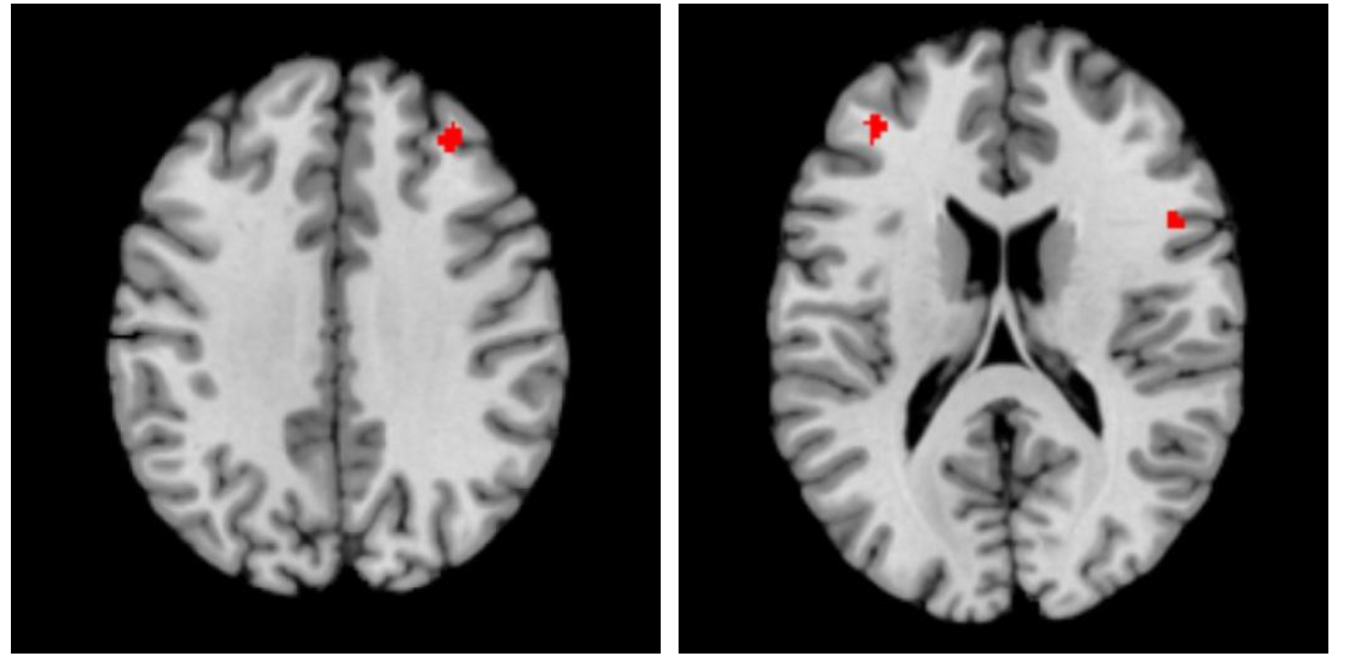
Figure 2. Brain regions showing MDD > HC (left) and MDD < HC (right) in emotional inhibitory control tasks.
| Regions | MNI (x, y, z) | Volume (mm3) | ALE | Brodmann area | Numbers of contributing studies | FSN |
|---|---|---|---|---|---|---|
| MDD > HC (k = 9) | ||||||
| Right Middle Frontal Gyrus | 34, 38, 32 | 312 | 0.0151 | BA9 | 2 | 3 < 21 < 31 |
| MDD < HC (k = 5) | ||||||
| Left Middle Frontal Gyrus | -36, 40, 16 | 232 | 0.0131 | BA10 | 2 | 2 < 12 < 35 |
| Right Inferior Frontal Gyrus | 50, 14, 18 | 320 | 0.0174 | 2 | 2 < 26 < 35 | |
Table 3 Differences in brain activation between MDD and HC in emotional inhibitory control tasks
| Regions | MNI (x, y, z) | Volume (mm3) | ALE | Brodmann area | Numbers of contributing studies | FSN |
|---|---|---|---|---|---|---|
| MDD > HC (k = 9) | ||||||
| Right Middle Frontal Gyrus | 34, 38, 32 | 312 | 0.0151 | BA9 | 2 | 3 < 21 < 31 |
| MDD < HC (k = 5) | ||||||
| Left Middle Frontal Gyrus | -36, 40, 16 | 232 | 0.0131 | BA10 | 2 | 2 < 12 < 35 |
| Right Inferior Frontal Gyrus | 50, 14, 18 | 320 | 0.0174 | 2 | 2 < 26 < 35 | |
| Regions | MNI (x, y, z) | Volume (mm3) | ALE | Brodmann area | Numbers of contributing studies | |
|---|---|---|---|---|---|---|
| MDD > HC (k = 7) | ||||||
| Right Middle Frontal Gyrus | 34, 38, 32 | 328 | 0.0151 | BA9 | 2 | |
| MDD < HC (k = 5) | ||||||
| Left Middle Frontal Gyrus | -36, 40, 16 | 232 | 0.0131 | BA10 | 2 | |
| Right Inferior Frontal Gyrus | 50, 14, 18 | 320 | 0.0174 | 2 | ||
Table 4 Results of ALE analysis after excluding coordinates extracted from ROI analysis
| Regions | MNI (x, y, z) | Volume (mm3) | ALE | Brodmann area | Numbers of contributing studies | |
|---|---|---|---|---|---|---|
| MDD > HC (k = 7) | ||||||
| Right Middle Frontal Gyrus | 34, 38, 32 | 328 | 0.0151 | BA9 | 2 | |
| MDD < HC (k = 5) | ||||||
| Left Middle Frontal Gyrus | -36, 40, 16 | 232 | 0.0131 | BA10 | 2 | |
| Right Inferior Frontal Gyrus | 50, 14, 18 | 320 | 0.0174 | 2 | ||
| (*indicates studies included in the meta-analysis.) | |
| [1] |
Aarts, K., Vanderhasselt, M. A., Otte, G., Baeken, C., & Pourtois, G. (2013). Electrical brain imaging reveals the expression and timing of altered error monitoring functions in major depression. Journal of Abnormal Psychology, 122(4), 939-950.
doi: 10.1037/a0034616 URL |
| [2] |
Acar, F., Seurinck, R., Eickhoff, S. B., & Moerkerke, B. (2018). Assessing robustness against potential publication bias in Activation Likelihood Estimation (ALE) meta-analyses for fMRI. PloS One, 13(11), e0208177.
doi: 10.1371/journal.pone.0208177 URL |
| [3] |
* Alders, G. L., Davis, A. D., MacQueen, G., Strother, S. C., Hassel, S., Zamyadi, M.,... CAN-BIND Investigator, Team. (2019). Reduced accuracy accompanied by reduced neural activity during the performance of an emotional conflict task by unmedicated patients with major depression: A CAN-BIND fMRI study. Journal of Affective Disorders, 257, 765-773.
doi: S0165-0327(19)30969-3 pmid: 31400735 |
| [4] | Apšvalka, D., Ferreira, C. S., Schmitz, T. W., Rowe, J. B., & Anderson, M. C. (2022). Dynamic targeting enables domain-general inhibitory control over action and thought by the prefrontal cortex. Nature Communications, 13(1), 274. |
| [5] |
Barbour, T., Holmes, A. J., Farabaugh, A. H., DeCross, S. N., Coombs, G., Boeke, E. A.,... Holt, D. J. (2020). Elevated amygdala activity in young adults with familial risk for depression: A potential marker of low resilience. Biological Psychiatry: Cognitive Neuroscience and Neuroimaging, 5(2), 194-202.
doi: S2451-9022(19)30274-5 pmid: 31948836 |
| [6] |
Beauregard, M. (2007). Mind does really matter: Evidence from neuroimaging studies of emotional self-regulation, psychotherapy, and placebo effect. Progress in Neurobiology, 81(4), 218-236.
pmid: 17349730 |
| [7] |
Boen, R., Raud, L., & Huster, R. J. (2022). Inhibitory control and the structural parcelation of the right inferior frontal gyrus. Frontiers in Human Neuroscience, 16, 787079.
doi: 10.3389/fnhum.2022.787079 URL |
| [8] |
Botvinick, M. M., Braver, T. S., Barch, D. M., Carter, C. S., & Cohen, J. D. (2001). Conflict monitoring and cognitive control. Psychological Review, 108(3), 624-652.
doi: 10.1037/0033-295x.108.3.624 pmid: 11488380 |
| [9] |
Buhle, J. T., Silvers, J. A., Wager, T. D., Lopez, R., Onyemekwu, C., Kober, H.,... Ochsner, K. N. (2014). Cognitive reappraisal of emotion: A meta-analysis of human neuroimaging studies. Cerebral Cortex, 24(11), 2981-2990.
doi: 10.1093/cercor/bht154 URL |
| [10] |
Cane, C., Carcone, D., Gardhouse, K., Lee, A. C. H., & Ruocco, A. C. (2023). An exploratory study of functional brain activation underlying response inhibition in major depressive disorder and borderline personality disorder. PloS One, 18(1), e0280215.
doi: 10.1371/journal.pone.0280215 URL |
| [11] |
* Carew, C. L., Milne, A. M., Tatham, E. L., MacQueen, G. M., & Hall, G. B. (2013). Neural systems underlying thought suppression in young women with, and at-risk, for depression. Behavioural Brain Research, 257, 13-24.
doi: 10.1016/j.bbr.2013.09.016 pmid: 24055881 |
| [12] |
* Chechko, N., Augustin, M., Zvyagintsev, M., Schneider, F., Habel, U., & Kellermann, T. (2013). Brain circuitries involved in emotional interference task in major depression disorder. Journal of Affective Disorders, 149(1-3), 136-145.
doi: 10.1016/j.jad.2013.01.013 pmid: 23394712 |
| [13] | Colich, N. L., Foland-Ross, L. C., Eggleston, C., Singh, M. K., & Gotlib, I. H. (2016). Neural aspects of inhibition following emotional primes in depressed adolescents. Journal of Clinical Child & Adolescent Psychology, 45(1), 21-30. |
| [14] |
* Crane, N. A., Jenkins, L. M., Dion, C., Meyers, K. K., Weldon, A. L., Gabriel, L. B.,... Langenecker, S. A. (2016). Comorbid anxiety increases cognitive control activation in major depressive disorder. Depression and Anxiety, 33(10), 967-977.
doi: 10.1002/da.22541 pmid: 27454009 |
| [15] | Cristofori, I., Cohen-Zimerman, S., & Grafman, J. (2019). Executive functions. Handbook of Clinical Neurology, 163, 197-219. |
| [16] |
* Dai, Q., Yin, X., Li, H., & Feng, Z. (2018). Orbito-frontal cortex mechanism of inhibition of return in current and remitted depression. Human Brain Mapping, 39(7), 2941-2954.
doi: 10.1002/hbm.24051 pmid: 29575563 |
| [17] |
Davey, C. G., Yücel, M., Allen, N. B., & Harrison, B. J. (2012). Task-related deactivation and functional connectivity of the subgenual cingulate cortex in major depressive disorder. Frontiers in Psychiatry, 3, 14.
doi: 10.3389/fpsyt.2012.00014 pmid: 22403553 |
| [18] |
* Dichter, G. S., Felder, J. N., & Smoski, M. J. (2009). Affective context interferes with cognitive control in unipolar depression: An fMRI investigation. Journal of Affective Disorders, 114(1-3), 131-142.
doi: 10.1016/j.jad.2008.06.027 pmid: 18706701 |
| [19] |
Diener, C., Kuehner, C., Brusniak, W., Ubl, B., Wessa, M., & Flor, H. (2012). A meta-analysis of neurofunctional imaging studies of emotion and cognition in major depression. Neuroimage, 61(3), 677-685.
doi: 10.1016/j.neuroimage.2012.04.005 pmid: 22521254 |
| [20] |
Diler, R. S., Pan, L. A., Segreti, A., Ladouceur, C. D., Forbes, E., Cela, S. R., … Phillips, M. L. (2014). Differential anterior cingulate activity during response inhibition in depressed adolescents with bipolar and unipolar major depressive disorder. Journal of the Canadian Academy of Child and Adolescent Psychiatry, 23(1), 10-19.
pmid: 24516473 |
| [21] |
Ehlis, A. C., Zarantonello, L., Haeussinger, F. B., Rohe, T., Rosenbaum, D., Fallgatter, A. J., & Maier, M. J. (2024). The DLPFC is centrally involved in resolving Stroop conflicts, suppressing distracting sensory input within the auditory and visual system. Frontiers in Psychology, 15, 1427455.
doi: 10.3389/fpsyg.2024.1427455 URL |
| [22] |
* Elliott, R., Rubinsztein, J. S., Sahakian, B. J., & Dolan, R. J. (2002). The neural basis of mood-congruent processing biases in depression. Archives of General Psychiatry, 59(7), 597-604.
doi: 10.1001/archpsyc.59.7.597 pmid: 12090812 |
| [23] |
* Eugène, F., Joormann, J., Cooney, R. E., Atlas, L. Y., & Gotlib, I. H. (2010). Neural correlates of inhibitory deficits in depression. Psychiatry Research: Neuroimaging, 181(1), 30-35.
doi: 10.1016/j.pscychresns.2009.07.010 URL |
| [24] |
* Fales, C. L., Barch, D. M., Rundle, M. M., Mintun, M. A., Snyder, A. Z., Cohen, J. D.,... Sheline, Y. I. (2008). Altered emotional interference processing in affective and cognitive-control brain circuitry in major depression. Biological Psychiatry, 63(4), 377-384.
doi: 10.1016/j.biopsych.2007.06.012 pmid: 17719567 |
| [25] |
Fascher, M., Nowaczynski, S., & Muehlhan, M. (2024). Substance use disorders are characterised by increased voxel-wise intrinsic measures in sensorimotor cortices: An ALE meta-analysis. Neuroscience and Biobehavioral Reviews, 162, 105712.
doi: 10.1016/j.neubiorev.2024.105712 URL |
| [26] | Ferri, J., Eisendrath, S. J., Fryer, S. L., Gillung, E., Roach, B. J., & Mathalon, D. H. (2017). Blunted amygdala activity is associated with depression severity in treatment-resistant depression. Cognitive, Affective, & Behavioral Neuroscience, 17(6), 1221-1231. |
| [27] |
Foland-Ross, L. C., Hamilton, J. P., Joormann, J., Berman, M. G., Jonides, J., & Gotlib, I. H. (2013). The neural basis of difficulties disengaging from negative irrelevant material in major depression. Psychological Science, 24(3), 334-344.
doi: 10.1177/0956797612457380 pmid: 23334445 |
| [28] | Friedrich, M. J. (2017). Depression Is the Leading Cause of Disability Around the World. JAMA, 317(15), 1517. |
| [29] |
Fu, X., Ding, Y., Chen, J., Liu, F., Li, H., Zhao, J., & Guo, W. (2022). Altered brain functional asymmetry in patients with major depressive disorder related to gastrointestinal symptoms. Frontiers in Neuroscience, 15, 797598.
doi: 10.3389/fnins.2021.797598 URL |
| [30] | Galkin, S. A., & Peshkovskaya, A. (2021). P.0675 Inhibitory control in therapy resistant patients with major depressive disorder. European Neuropsychopharmacology, 53(1), S495. |
| [31] |
Gentili, C., Messerotti Benvenuti, S., Lettieri, G., Costa, C., & Cecchetti, L. (2019). ROI and phobias: The effect of ROI approach on an ALE meta‐analysis of specific phobias. Human Brain Mapping, 40(6), 1814-1828.
doi: 10.1002/hbm.v40.6 URL |
| [32] |
Grahn, J. A., Parkinson, J. A., & Owen, A. M. (2008). The cognitive functions of the caudate nucleus. Progress in Neurobiology, 86(3), 141-155.
doi: 10.1016/j.pneurobio.2008.09.004 pmid: 18824075 |
| [33] |
Halari, R., Simic, M., Pariante, C. M., Papadopoulos, A., Cleare, A., Brammer, M., Fombonne, E., & Rubia, K. (2009). Reduced activation in lateral prefrontal cortex and anterior cingulate during attention and cognitive control functions in medication-naïve adolescents with depression compared to controls. Journal of Child Psychology and Psychiatry, 50(3), 307-316.
doi: 10.1111/jcpp.2009.50.issue-3 URL |
| [34] |
He, Q. X., Li, Z. L., & Yang, H. B. (2025). Dual-system perspectives: A meta-analytic comparison of striatal and prefrontal cortex activation patterns in substance addiction versus behavioral addiction. Acta Psychologica Sinica, 57(8), 1333-1348.
doi: 10.3724/SP.J.1041.2025.1333 |
| [35] |
Henriques, J. B., & Davidson, R. J. (1991). Left frontal hypoactivation in depression. Journal of Abnormal Psychology, 100(4), 535-545.
doi: 10.1037//0021-843x.100.4.535 pmid: 1757667 |
| [36] | Imajo, N., Matsuzaki, Y., Kobayashi, A., Sakaki, K., Nouchi, R., & Kawashima, R. (2024). Self-choice emotion regulation enhances stress reduction: Neural basis of self-choice emotion regulation. Brain Sciences, 14(11), 1077. |
| [37] | Javaheripour, N., Colic, L., Opel, N., Li, M., Maleki Balajoo, S., Chand, T., … Walter, M. (2023). Altered brain dynamic in major depressive disorder: State and trait features. Translational Psychiatry, 13(1), 261. |
| [38] |
Jaworska, N., Yang, X. R., Knott, V., & MacQueen, G. (2015). A review of fMRI studies during visual emotive processing in major depressive disorder. The World Journal of Biological Psychiatry: The Official Journal of the World Federation of Societies of Biological Psychiatry, 16(7), 448-471.
doi: 10.3109/15622975.2014.885659 URL |
| [39] |
Joormann, J., & Gotlib, I. H. (2010). Emotion regulation in depression: Relation to cognitive inhibition. Cognition and Emotion, 24(2), 281-298.
doi: 10.1080/02699930903407948 URL |
| [40] |
Kang, W., Hernández, S. P., Rahman, M. S., Voigt, K., & Malvaso, A. (2022). Inhibitory control development: A network neuroscience perspective. Frontiers in Psychology, 13, 651547.
doi: 10.3389/fpsyg.2022.651547 URL |
| [41] |
Kikuchi, T., Miller, J. M., Schneck, N., Oquendo, M. A., Mann, J. J., Parsey, R. V., & Keilp, J. G. (2012). Neural responses to incongruency in a blocked-trial Stroop fMRI task in major depressive disorder. Journal of Affective Disorders, 143(1-3), 241-247.
doi: 10.1016/j.jad.2012.05.016 pmid: 22995943 |
| [42] |
* Korgaonkar, M. S., Grieve, S. M., Etkin, A., Koslow, S. H., & Williams, L. M. (2013). Using standardized fMRI protocols to identify patterns of prefrontal circuit dysregulation that are common and specific to cognitive and emotional tasks in major depressive disorder: First wave results from the iSPOT-D study. Neuropsychopharmacology, 38(5), 863-871.
doi: 10.1038/npp.2012.252 pmid: 23303059 |
| [43] |
* Langenecker, S. A., Kennedy, S. E., Guidotti, L. M., Briceno, E. M., Own, L. S., Hooven, T., … Zubieta, J. K. (2007). Frontal and limbic activation during inhibitory control predicts treatment response in major depressive disorder. Biological Psychiatry, 62(11), 1272-1280.
doi: 10.1016/j.biopsych.2007.02.019 pmid: 17585888 |
| [44] |
Li, Y., Liu, X., Li, J., Zhang, Q., Pan, N., Luo, K.,... Gong, Q. (2025). Common and distinct patterns of brain activity alterations during inhibitory control in depression and psychostimulant users: A comparative meta-analysis of task-based fMRI studies. Psychological Medicine, 55, e218.
doi: 10.1017/S0033291725101141 pmid: 40717270 |
| [45] |
Lisiecka, D. M., Carballedo, A., Fagan, A. J., Connolly, G., Meaney, J., & Frodl, T. (2012). Altered inhibition of negative emotions in subjects at family risk of major depressive disorder. Journal of Psychiatric Research, 46(2), 181-188.
doi: 10.1016/j.jpsychires.2011.10.010 pmid: 22078646 |
| [46] |
* Liu, C., Dai, J., Chen, Y., Qi, Z., Xin, F., Zhuang, Q.,... Becker, B. (2021). Disorder-and emotional context-specific neurofunctional alterations during inhibitory control in generalized anxiety and major depressive disorder. Neuroimage: Clinical, 30, 102661.
doi: 10.1016/j.nicl.2021.102661 URL |
| [47] |
Loeffler, L. A., Radke, S., Habel, U., Ciric, R., Satterthwaite, T. D., Schneider, F., & Derntl, B. (2018). The regulation of positive and negative emotions through instructed causal attributions in lifetime depression-A functional magnetic resonance imaging study. Neuroimage: Clinical, 20, 1233-1245.
doi: 10.1016/j.nicl.2018.10.025 URL |
| [48] | Lojowska, M., Gerbracht, J. M., Engelmann, J. B., Roelofs, K., & Mulckhuyse, M. (2025). A transcranial magnetic stimulation study on the role of the right angular gyrus in orienting and reorienting of attention toward threat. Cognitive, Affective, & Behavioral Neuroscience, 25(3), 668-678. |
| [49] |
Mansueto, S. P., Romeo, Z., Angrilli, A., & Spironelli, C. (2025). Emotional pictures in the brain and their interaction with the task: A fine-grained fMRI coordinate-based meta-analysis study. Neuroimage, 305, 120986.
doi: 10.1016/j.neuroimage.2024.120986 URL |
| [50] | Martínez-Amorós, E., Cardoner, N., Gálvez, V., de Arriba-Arnau, A., Soria, V., Palao, D. J., Menchón, J. M., & Urretavizcaya, M. (2021). Can the addition of maintenance electroconvulsive therapy to pharmacotherapy improve relapse prevention in severe major depressive disorder? A randomized controlled trial. Brain Sciences, 11(10), 1340. |
| [51] |
Matsubara, T., Matsuo, K., Nakashima, M., Nakano, M., Harada, K., Watanuki, T.,... Watanabe, Y. (2014). Prefrontal activation in response to emotional words in patients with bipolar disorder and major depressive disorder. Neuroimage, 85(Part 1), 489-497.
doi: 10.1016/j.neuroimage.2013.04.098 URL |
| [52] |
* Matthews, S., Simmons, A., Strigo, I., Gianaros, P., Yang, T., & Paulus, M. (2009). Inhibition-related activity in subgenual cingulate is associated with symptom severity in major depression. Psychiatry Research: Neuroimaging, 172(1), 1-6.
doi: 10.1016/j.pscychresns.2008.08.006 URL |
| [53] |
Nishizawa, Y., Kanazawa, T., Kawabata, Y., Matsubara, T., Maruyama, S., Kawano, M., … Yoneda, H. (2019). fNIRS Assessment during an Emotional Stroop Task among Patients with Depression: Replication and Extension. Psychiatry Investigation, 16(1), 80-86.
doi: 10.30773/pi.2018.11.12.2 pmid: 30696239 |
| [54] | Ochsner, K., N., & Gross, J. J. (2004). Thinking makes it so:A social cognitive neuroscience approach to emotion regulation. In R. F. Baumeister & K. D. Vohs (Eds.), Handbook of self-regulation: Research, theory, and applications (pp. 229-255). Guilford Press. |
| [55] |
Page, M. J., McKenzie, J. E., Bossuyt, P. M., Boutron, I., Hoffmann, T. C., Mulrow, C. D., … Moher, D. (2021). The PRISMA 2020 statement: An updated guideline for reporting systematic reviews. International Journal of Surgery, 88, 105906.
doi: 10.1016/j.ijsu.2021.105906 URL |
| [56] | Palser, E. R., Morris, N. A., Veziris, C. R., Holley, S. R., Wallman- Jones, A., Roy, A. R. K., … Sturm, V. E. (2025). Role of left lateral prefrontal cortex in positive emotion regulation: Insights from dyslexia. Cognitive, Affective & Behavioral Neuroscience, 25(6), 1638-1654. |
| [57] |
Peckham, A. D., McHugh, R. K., & Otto, M. W. (2010). A meta-analysis of the magnitude of biased attention in depression. Depression and Anxiety, 27(12), 1135-1142.
doi: 10.1002/da.20755 pmid: 21049527 |
| [58] |
Perini, G., Cotta Ramusino, M., Sinforiani, E., Bernini, S., Petrachi, R., & Costa, A. (2019). Cognitive impairment in depression: Recent advances and novel treatments. Neuropsychiatric Disease and Treatment, 15, 1249-1258.
doi: 10.2147/NDT.S199746 pmid: 31190831 |
| [59] |
Piani, M. C., Maggioni, E., Delvecchio, G., & Brambilla, P. (2022). Sustained attention alterations in major depressive disorder: A review of fMRI studies employing Go/No-Go and CPT tasks. Journal of Affective Disorders, 303, 98-113.
doi: 10.1016/j.jad.2022.02.003 pmid: 35139418 |
| [60] |
Quigley, L., Wen, A., & Dobson, K. S. (2020). Cognitive control over emotional information in current and remitted depression. Behaviour Research and Therapy, 132, 103658.
doi: 10.1016/j.brat.2020.103658 URL |
| [61] |
Rey-Mermet, A., Gade, M., & Oberauer, K. (2018). Should we stop thinking about inhibition? Searching for individual and age differences in inhibition ability. Journal of Experimental Psychology: Learning, Memory, and Cognition, 44(4), 501-526.
doi: 10.1037/xlm0000450 URL |
| [62] |
* Richard-Devantoy, S., Ding, Y., Lepage, M., Turecki, G., & Jollant, F. (2016). Cognitive inhibition in depression and suicidal behavior: A neuroimaging study. Psychological Medicine, 46(5), 933-944.
doi: 10.1017/S0033291715002421 pmid: 26670261 |
| [63] | * Sacchet, M. D., Levy, B. J., Hamilton, J. P., Maksimovskiy, A., Hertel, P. T., Joormann, J., … Gotlib, I. H. (2017). Cognitive and neural consequences of memory suppression in major depressive disorder. Cognitive, Affective & Behavioral Neuroscience, 17(1), 77-93. |
| [64] |
Schnellbächer, G. J., Rajkumar, R., Veselinović, T., Ramkiran, S., Hagen, J., Shah, N. J., & Neuner, I. (2022). Structural alterations of the insula in depression patients - A 7-Tesla-MRI study. Neuroimage: Clinical, 36, 103249.
doi: 10.1016/j.nicl.2022.103249 URL |
| [65] |
Sheena, M. K., Jimmy, J., Burkhouse, K. L., & Klumpp, H. (2021). Anterior cingulate cortex activity during attentional control corresponds with rumination in depression and social anxiety. Psychiatry Research: Neuroimaging, 317, 111385.
doi: 10.1016/j.pscychresns.2021.111385 URL |
| [66] |
Shen, N., Chen, Z., Sun, H., Tian, S., Wang, Y., Huang, Y., … Lu, Q. (2025). Altered dynamic brain activity of recent suicidal ideation and suicidal attempt in depression patients and its relationship with cognitive function. Journal of Affective Disorders, 377, 35-44.
doi: 10.1016/j.jad.2025.02.054 URL |
| [67] | Shetty, T., Kashyap, H., Mehta, U. M., & Binu, V. S. (2025). Executive function and emotion regulation in depressive and anxiety disorders: A cross-sectional study. Indian Journal of Psychological Medicine. Advance online publication. https://doi.org/10.1177/025371762513405 |
| [68] | Shimony, O., Einav, N., Bonne, O., Jordan, J. T., Van Vleet, T. M., & Nahum, M. (2021). The association between implicit and explicit affective inhibitory control, rumination and depressive symptoms. Scientific Reports, 11(1), 11490. |
| [69] | * Simeonova, D., Paunova, R., Stoyanova, K., Todeva-Radneva, A., Kandilarova, S., & Stoyanov, D. (2022). Functional MRI correlates of stroop N-back test underpin the diagnosis of major depression. Journal of Integrative Neuroscience, 21(4), 113. |
| [70] |
Sindermann, L., Leehr, E. J., Redlich, R., Meinert, S., Böhnlein, J., Grotegerd, D., … Dannlowski, U. (2022). Emotion processing in depression with and without comorbid anxiety disorder. Journal of Affective Disorders, 314, 133-142.
doi: 10.1016/j.jad.2022.06.089 pmid: 35803393 |
| [71] |
Smith, S. M., & Nichols, T. E. (2009). Threshold-free cluster enhancement: Addressing problems of smoothing, threshold dependence and localisation in cluster inference. Neuroimage, 44(1), 83-98.
doi: 10.1016/j.neuroimage.2008.03.061 pmid: 18501637 |
| [72] |
Sridhar, M., Azeez, A., & Lissemore, J. I. (2024). TMS-fMRI supports roles for VLPFC and downstream regions in cognitive reappraisal. Journal of Neuroscience, 44(18), e2213232024.
doi: 10.1523/JNEUROSCI.2213-23.2024 URL |
| [73] |
Stevens, E. S., Funkhouser, C. J., Auerbach, R. P., Talati, A., Gameroff, M. G., Posner, J. E.,... Shankman, S. A. (2023). Inhibition predicts the course of depression and anxiety symptoms among adolescents: The moderating role of familial risk. The Journal of Nervous and Mental Disease, 211(2), 100-107.
doi: 10.1097/NMD.0000000000001584 URL |
| [74] |
Tamm, S., Harmer, C. J., Schiel, J., Holub, F., Rutter, M. K., Spiegelhalder, K., & Kyle, S. D. (2022). No association between amygdala responses to negative faces and depressive symptoms: Cross-sectional data from 28, 638 individuals in the UK Biobank cohort. American Journal of Psychiatry, 179(7), 509-513.
doi: 10.1176/appi.ajp.21050466 URL |
| [75] |
Taylor, W. D., Butters, M. A., Elson, D., Szymkowicz, S. M., Jennette, K., Baker, K., … Ajilore, O. (2025). Reconsidering remission in recurrent late-life depression: Clinical presentation and phenotypic predictors of relapse following successful antidepressant treatment. Psychological Medicine, 54(16), 4896-4907.
doi: 10.1017/S0033291724003246 URL |
| [76] |
Thiebaut de Schotten, M., Dell'Acqua, F., Forkel, S. J., Simmons, A., Vergani, F., Murphy, D. G., & Catani, M. (2011). A lateralized brain network for visuospatial attention. Nature Neuroscience, 14(10), 1245-1246.
doi: 10.1038/nn.2905 pmid: 21926985 |
| [77] | Tolomeo, S., & Yu, R. (2022). Brain network dysfunctions in addiction: A meta-analysis of resting-state functional connectivity. Translational Psychiatry, 12(1), 41. |
| [78] |
Torralbo, A., Kelley, T. A., Rees, G., & Lavie, N. (2016). Attention induced neural response trade-off in retinotopic cortex under load. Scientific Reports, 6, 33041.
doi: 10.1038/srep33041 pmid: 27625311 |
| [79] |
Tozzi, L., Goldstein-Piekarski, A. N., Korgaonkar, M. S., & Williams, L. M. (2020). Connectivity of the cognitive control network during response inhibition as a predictive and response biomarker in major depression: Evidence from a randomized clinical trial. Biological Psychiatry, 87(5), 462-472.
doi: S0006-3223(19)31617-8 pmid: 31601424 |
| [80] |
Turkeltaub, P. E., Eden, G. F., Jones, K. M., & Zeffiro, T. A. (2002). Meta-analysis of the functional neuroanatomy of single-word reading: Method and validation. Neuroimage, 16(3), 765-780.
doi: 10.1006/nimg.2002.1131 URL |
| [81] |
Tyler, S. C., Dasgupta, S., Agosta, S., Battelli, L., & Grossman, E. D. (2015). Functional connectivity of parietal cortex during temporal selective attention. Cortex, 65, 195-207.
doi: 10.1016/j.cortex.2015.01.015 pmid: 25747530 |
| [82] |
* Wagner, G., Sinsel, E., Sobanski, T., Köhler, S., Marinou, V., Mentzel, H. J., Sauer, H., & Schlösser, R. G. (2006). Cortical inefficiency in patients with unipolar depression: An event-related FMRI study with the Stroop task. Biological Psychiatry, 59(10), 958-965.
doi: 10.1016/j.biopsych.2005.10.025 pmid: 16458263 |
| [83] |
Wan, L., Pei, P., Zhang, Q., & Gao, W. (2024). Specificity in the commonalities of inhibition control: Using meta-analysis and regression analysis to identify the key brain regions in psychiatric disorders. European Psychiatry, 67(1), e69.
doi: 10.1192/j.eurpsy.2024.1785 pmid: 39397695 |
| [84] |
* Wang, L., LaBar, K. S., Smoski, M., Rosenthal, M. Z., Dolcos, F., Lynch, T. R., Krishnan, R. R., & McCarthy, G. (2008). Prefrontal mechanisms for executive control over emotional distraction are altered in major depression. Psychiatry Research: Neuroimaging, 163(2), 143-155.
doi: 10.1016/j.pscychresns.2007.10.004 URL |
| [85] |
Wheeler, R. E., Davidson, R. J., & Tomarken, A. J. (1993). Frontal brain asymmetry and emotional reactivity: A biological substrate of affective style. Psychophysiology, 30(1), 82-89.
doi: 10.1111/j.1469-8986.1993.tb03207.x pmid: 8416065 |
| [86] | Yan, H., Lau, W. K. W., Eickhoff, S. B., Long, J., Song, X., Wang, C., … Zhang, R. (2022). Charting the neural circuits disruption in inhibitory control and its subcomponents across psychiatric disorders: A neuroimaging meta-analysis. Progress in Neuro-Psychopharmacology & Biological Psychiatry, 119, 110618. |
| [87] |
* Yang, T., Lei, X., & Anderson, M. (2016). Decreased inhibitory control of negative information in directed forgetting. International Journal of Psychophysiology, 100, 44-51.
doi: 10.1016/j.ijpsycho.2015.09.007 pmid: 26386395 |
| [88] |
Zacková, L., Jáni, M., Brázdil, M., Nikolova, Y. S., & Marečková, K. (2021). Cognitive impairment and depression: Meta-analysis of structural magnetic resonance imaging studies. Neuroimage: Clinical, 32, 102830.
doi: 10.1016/j.nicl.2021.102830 URL |
| [89] |
Zheng, M., Da, H., Pan, X., Bian, Y., Li, X., Xiao, Q.,... Zhang, Y. (2023). Dorsolateral prefrontal activation in depressed young adults with and without suicidal ideation during an emotional autobiographical memory task: A fNIRS study. Journal of Affective Disorders, 326, 216-224.
doi: 10.1016/j.jad.2023.01.115 pmid: 36736791 |
| [90] |
Zhou, H. X., Chen, X., Shen, Y. Q., Li, L., Chen, N. X., Zhu, Z. C.,... Yan, C. G. (2020). Rumination and the default mode network: Meta- analysis of brain imaging studies and implications for depression. NeuroImage, 206, 116287.
doi: 10.1016/j.neuroimage.2019.116287 URL |
| [91] | Zhuang, Q., Qiao, L., Xu, L., Yao, S., Chen, S., Zheng, X., … Becker, B. (2023). The right inferior frontal gyrus as pivotal node and effective regulator of the basal ganglia-thalamocortical response inhibition circuit. Psychoradiology, 3, kkad016. |
| [92] |
Zuo, Z., Ran, S., Wang, Y., Li, C., Han, Q., Tang, Q.,... Li, H. (2018). Altered structural covariance among the dorsolateral prefrontal cortex and amygdala in treatment-naive patients with major depressive disorder. Frontiers in Psychiatry, 9, 323.
doi: 10.3389/fpsyt.2018.00323 URL |
| Viewed | ||||||
|
Full text |
|
|||||
|
Abstract |
|
|||||
